
The Aisling: Ireland’s Dream Poem
An aisling is a dream poem in which Ireland appears to the poet as a grieving woman. It is also a century of coded political writing. How to read one.
An aisling is a dream poem in which Ireland appears to the poet as a grieving woman. It is also a century of coded political writing. How to read one.
Eighteen poetry forms, each with a full guide: what the form is for, how it is built, where it came from, and an original example.
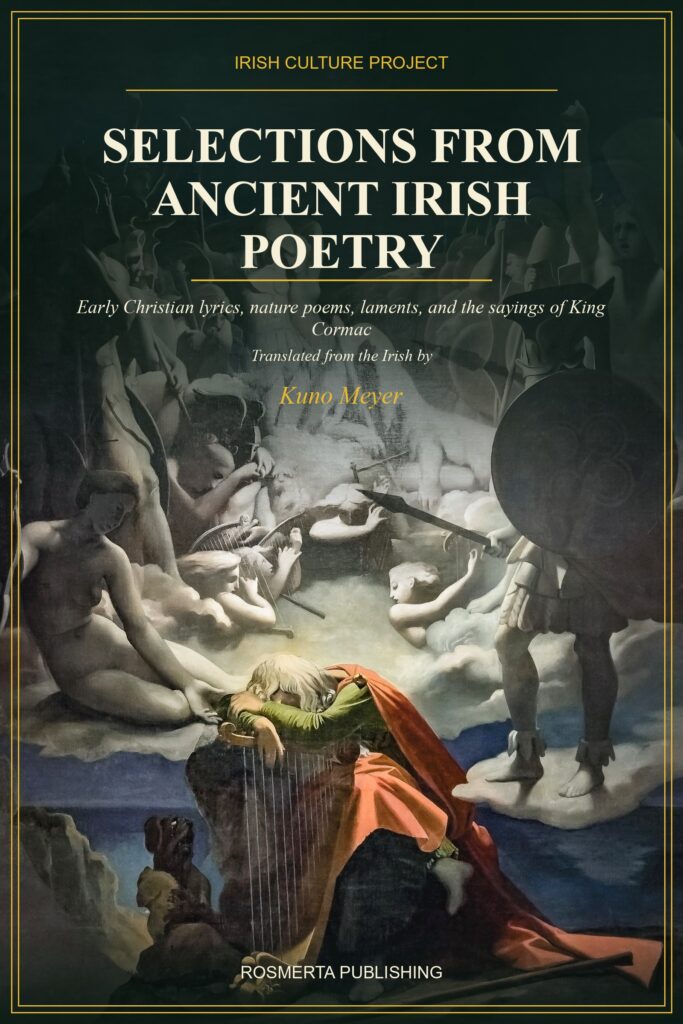
Kuno Meyer gathered the finest short poems of early Christian Ireland in 1911: Pangur Bán, the Old Woman of Beare, Colum Cille in exile. What we restored, and what we left alone.
A cento is a poem made entirely of lines from other poems. Every line is a quotation. Done well, it is one of the most honest forms in English.
An aubade is a dawn poem, not a morning poem. A morning poem describes the morning. An aubade argues with it. Here is how to write one that works.
The villanelle is simple. The execution is not. Two refrains do all the work, and if you pick the wrong ones the poem collapses. How to write one that works.
In 1773 a woman stood over her murdered husband and composed the greatest poem written in these islands in the eighteenth century. Here is the tradition that produced it.
Before Heaney on bogs, before the Nobel for a poem about a forge, there were 176 medieval Irish poems whose only job was to explain why a place was called what it was called.
A German philologist in 1911 translated a hundred early Irish lyrics and changed what anyone thought Irish poetry was. Most people have never read him.
A ballad was never a love song. From Scottish murder ballads to Lead Belly to Gwendolyn Brooks, it has always been a reckoning.